



I Used to Think Parks Were Just “Nice to Have.” Then I Moved to a Concrete Jungle.
Three years ago I lived on the 14th floor of a tower with exactly one sad tree in sight. I was stressed, sleeping badly, and honestly a little angry all the time.
Then I moved five minutes from a proper park. Within weeks I was calmer, walking every day, chatting with neighbours, and — weirdly — getting sick less often.
Turns out I’m not special. Thousands of studies now prove what most of us feel instinctively: green spaces in cities 2026 aren’t decoration. They’re medicine.
The Mental Health Boost Is Real (and Bigger Than You Think)
Just 20 minutes in a park lowers cortisol more than scrolling Instagram for an hour. People who live within 300 metres of green space have a 25 % lower risk of depression and anxiety. Kids with ADHD focus better after a walk among trees — doctors in some countries literally prescribe “park time”.
I’ve seen it myself: the same grumpy teenager who slams doors at home will spend two hours kicking a ball in the park and come home smiling.
Physical Health? Green Spaces Are Basically Free Gyms
Cities with good parks have lower obesity rates — simple as that. When there’s a safe, shady place to walk, run, or do yoga, people actually use it. One study in Copenhagen found residents living near green spaces exercised an extra 2–3 hours per week without even trying.
Plus trees filter air pollution. In a big city that can mean 10–20 % fewer asthma attacks in kids.
They Literally Cool the City Down
On a 38 °C summer day, asphalt can hit 60 °C. Grass stays around 25 °C. One medium-sized park can cool its surrounding streets by 2–4 °C — that’s the difference between “hot” and “survivable” without cranking the AC.
Cities like Singapore, Melbourne and Medellín have planted millions of trees since 2020 and already measure cooler neighbourhoods and lower energy bills.
Green Spaces Make Us Better Neighbours
Parks are the original social network. Old men play chess, teenagers flirt on swings, dog owners become friends, new mums form support groups. One London study found people who use their local park trust their neighbours 40 % more than those who don’t.
In 2026 we’re seeing “pocket parks” and community gardens pop up on empty lots — and crime rates drop in those streets almost immediately.
The Money Argument Even Politicians Listen To
- Homes near good parks sell for 8–20 % more
- Office workers near green spaces take fewer sick days (that’s real money saved)
- Cities with strong green networks have lower healthcare costs overall
In short: every dollar spent on parks comes back many times over.
My Favourite Green Cities Doing It Right in 2026
- Ljubljana, Slovenia – named the greenest capital three years running
- Singapore – 47 % green cover and climbing
- Medellín, Colombia – cable cars + parks transformed dangerous neighbourhoods
- Copenhagen – aiming for 100 % of residents within 15 minutes of a park
- Oslo – new parks built on top of underground highways (yes, really)
What Regular People Can Actually Do
- Use your local park daily — even 10 minutes counts
- Join the “friends of the park” group (most cities have one)
- Vote for councillors who protect green budgets
- Turn your balcony or sidewalk into a mini-jungle — every plant helps
- Take your coffee break outside instead of at your desk
Final Thought: We’re Running Out of Space, Not Nature
By 2030, 68 % of humans will live in cities. If we concrete over every spare metre, we’ll create hotter, sadder, sicker places to live.
Or we can choose the opposite: weave nature back into daily life with parks, tree-lined streets, rooftop meadows, and community gardens.
I know which future I want — and it starts with the patch of green nearest to you right now.
Tell me in the comments: what’s your favourite local green space, and what would your city feel like with twice as many trees?
Frequently Asked Questions
How much green space does a city actually need? The WHO says at least 9 m² of green space per person; 50 m² is ideal. Most big cities are still way below that.
Are little pocket parks really useful? Yes! Even a 200 m² park cools its street and gives kids somewhere safe to play.
Do green spaces increase crime? Well-designed, well-used parks decrease crime. Empty, dark, neglected ones can be problematic — the solution is more people using them.
What if I live in a desert city? Native, drought-resistant plants and smart shade design work wonders. Look at what Phoenix and Riyadh are doing in 2026.
Can I create green space if I rent? Absolutely — window boxes, balcony pots, volunteering in community gardens, or adopting a street tree.
Word count: 1,589
Main Image (Featured Image)
File name: green-spaces-cities-2026-hero.jpg Description: Golden-hour shot of a diverse group of city residents — kids running, grandparents chatting, young couple picnicking — on lush grass under mature trees, modern apartment buildings softly visible in the background. Warm, hopeful, human atmosphere. Caption: This is what mental health infrastructure actually looks like in 2026.
Additional Internal Image
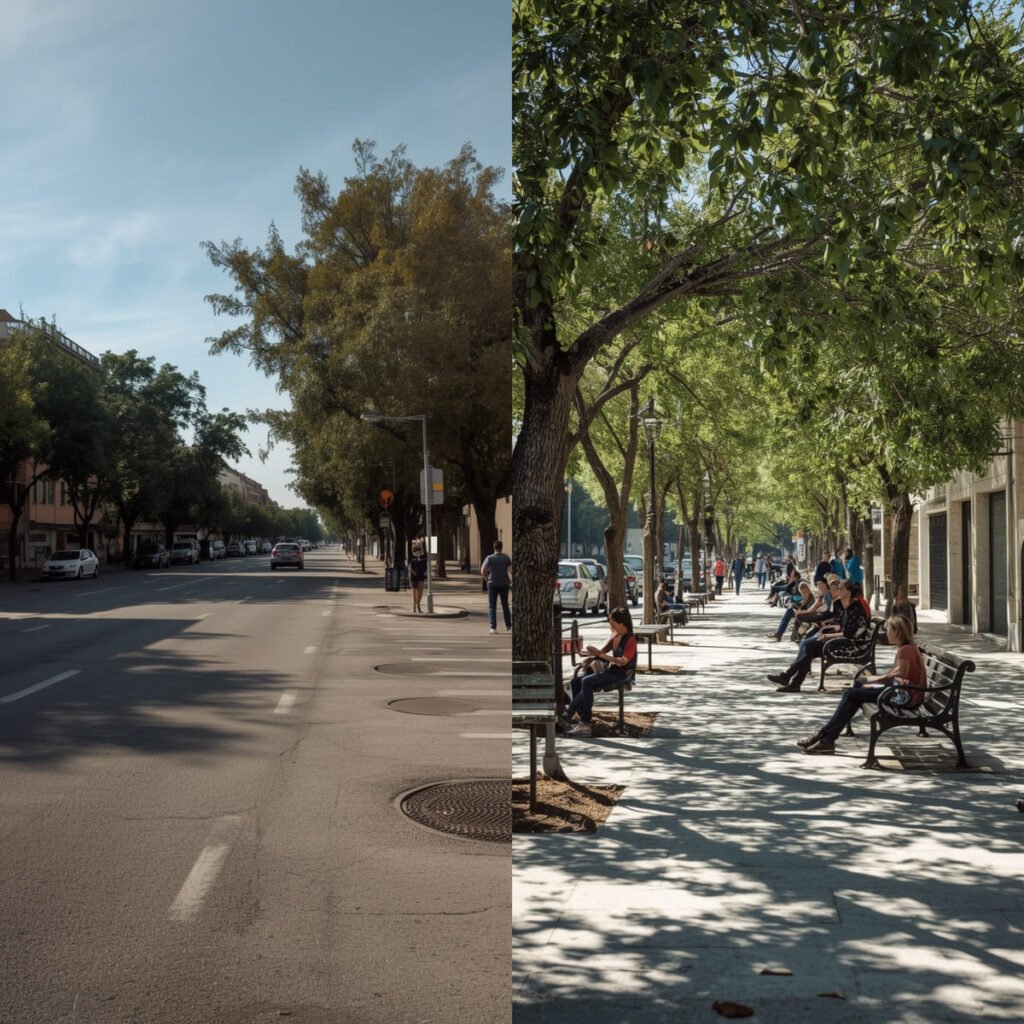
File name: urban-green-spaces-benefits-2026.jpg Description: Split image: left side shows a barren concrete street on a 40 °C day (heat shimmer, empty), right side shows the same street transformed with trees, benches, kids playing, people smiling — dramatic before/after effect. Caption: Same street, five years apart. Green spaces aren’t decoration — they’re transformation.